
Let’s Talk about the “A” word: Anger
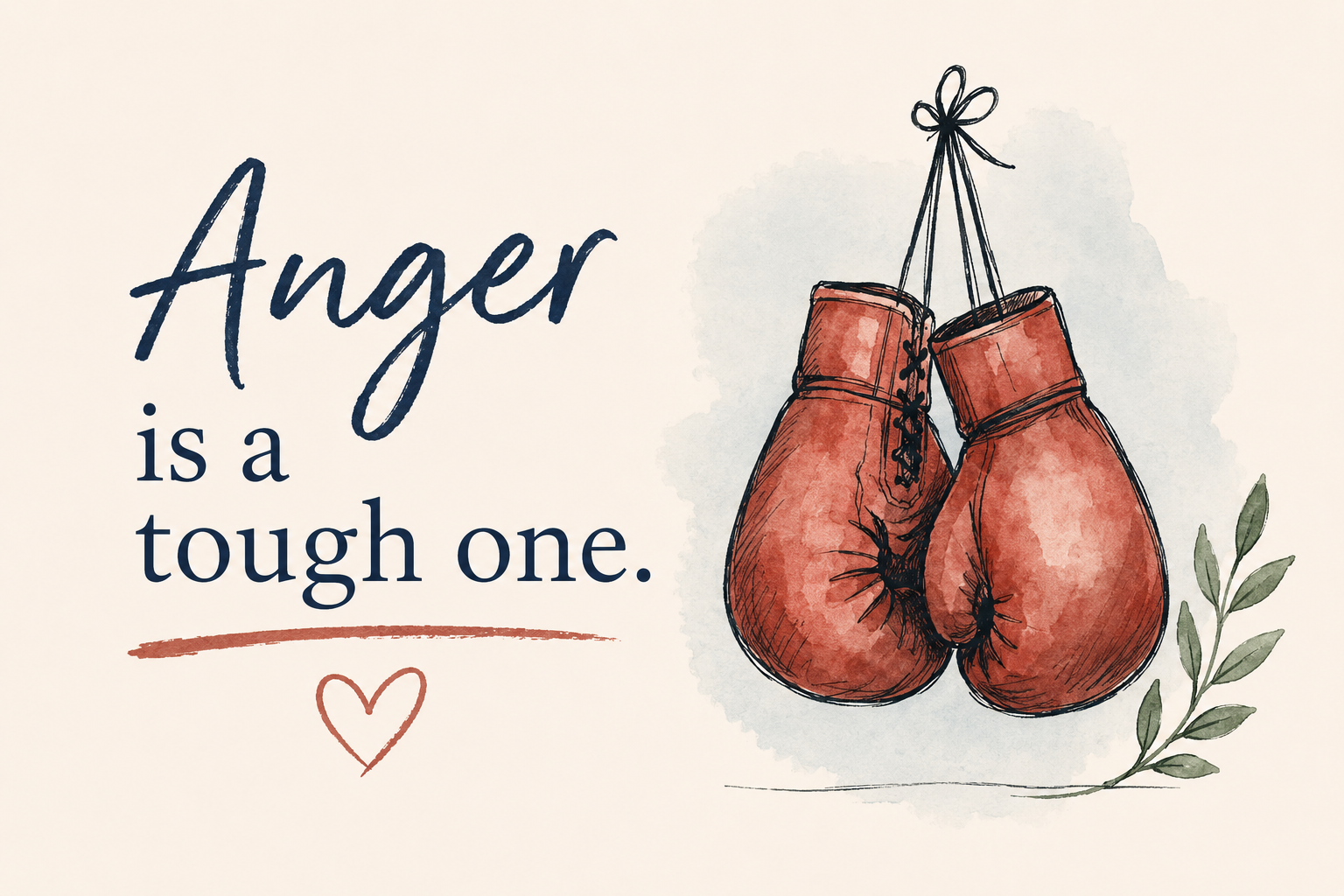
Anger is a tough one. For many of us, especially those in caregiving roles, it’s not something we feel comfortable expressing. So, we do what we’ve learned to do: push it down, tell ourselves it’s not a big deal, take the bitter pill and “suck it up.” But anger doesn’t disappear just because we ignore it. It lingers in the background, slowing the mental computer, dulling the vibrancy of the day, and quietly shaping a narrative that says, “I don’t really matter.” Over time, resentments build, reactions intensify, and often we don’t even know why.
We lose sight of our triggers. We don’t recognize that what someone said or did today may be touching something much older, something rooted in a different time, a different land from a far off place within us. As a result, the anger feels justified and immediate, but also confusingly amplified. And sometimes, we’re angry because we can’t change what’s in front of us. We feel stuck. We feel powerless. That, too, fuels the fire.
The A word is a regular part of the work for many of my clients. It is a common experience to hear about social interactions that feel disrespectful, dismissive, or lacking awareness, and the reaction is immediate. There’s a surge of agitation, a sense of “No way you’re going to get away with that,” and a strong urge to push that person as far out of their life as possible. The assumption underneath often sounds like, “You’ve got issues, man!”, or “You want me to feel bad so you can feel better,” or worse, “You’re trying to make yourself look good by putting me down.”
But those assumptions, while they feel real, are still assumptions and not necessarily the truth. In fact, it is often the nervous system reacting, moving quickly into a fight or flight response. Our system is trying to protect us, and it does the job very well by filling in the blanks fast, using a narrative and a story that we’ve been conditioned to believe as fact. The reality is, we all have a story running in our own mental computer, and most of the time, that story isn’t about us in the way we think it is. I have come to understand after decades doing work as a psychologist that many times people have no awareness that something they said or did landed in a hurtful way. That doesn’t invalidate our emotional response, but it does invite us to slow down and get curious before we act.
People respond to anger in different ways. Some express it outwardly through sharp words or passive aggressive comments. Others turn it inward. That quieter version often looks more acceptable, but it shows up in subtle ways: the second drink, staying up too late, binge-watching Netflix, or other forms of numbing. We tell ourselves, “At least I’m not acting out,” but our nervous system knows something isn’t right. Those subtle shutdowns are signals that we’re not well, that something in us needs attention.
What if anger isn’t the problem? What if it’s actually a signal…not just a flash of frustration or justification, but a call to wake up? Wake up to ourselves, wake up to what we’re avoiding, wake up to the places within us that feel unseen, unheard, or unprotected. What if the people “making us so angry” are not just obstacles, but messengers, like a homing pigeon delivering something from a far-off place within us, a message we may not want to read, but one that is worth opening…a battle worth preparing for.
Instead of feeding the old stories and cognitive distortions, what if we asked better questions? What else is going on for me right now? What might this be touching from my past? What am I avoiding? Where do I feel powerless, and what can I actually influence? What would help me feel more aligned or more empowered? What if anger isn’t something to suppress or explode, but something to get to know?
Lately, I’ve been experimenting with this idea. Given that my word for the year is “playfulness”, I thought, why not bring that into one of the hardest emotional experiences we have? Recently when I felt triggered and misunderstood by a family member, I could feel the heat building; the urge to react, the pull to say something sharp and definitive. Part of me wanted to unload. After all, they were interrupting my inner calm. But instead of shutting it down or letting it spill out, I leaned in. “Alright, anger,” I thought, “let’s see what you’ve got.”
And then I played. I started shadowboxing in the air, huffing and puffing like I was about to blow the house down. Maybe a few push-ups, maybe channeling a little Rocky Balboa energy, “Yo, Adrian!” I was definitely mad, but I was also aware. That’s the difference. I wasn’t lost in the story. I was engaging the energy. And interestingly, the anger turned into something more honest and manageable.
Anger has energy. It wants movement, expression, acknowledgment. When we suppress it, it turns inward. When we act it out unconsciously, it can damage relationships. But when we engage it consciously, it becomes information. It becomes activation. It becomes a resource. In those moments, I’m not denying my anger, and I’m not letting it take over. I’m choosing to process it. I have a right to feel angry. We all do. People say things that hurt. Life can feel unfair. The world can feel overwhelming. The opportunity is in how we meet that anger.
What if anger isn’t something to fear or avoid, but a witness to our humanness? In a world increasingly shaped by AI and automation, one thing remains uniquely ours, we get to feel. And maybe anger, when approached with curiosity and even a bit of playfulness, can help us reconnect with parts of ourselves that we’ve exiled on that remote mental island. Maybe anger is not meant to justify harm, and not to fuel resentment, but to invite self-awareness.
May is Mental Health Awareness Month, a reminder that connecting to our emotional world matters. It matters in the loud moments and in the quiet ones, in the anger we express and the anger we carry silently. Perhaps this is the month that you or someone you know is ready to work through the feelings that so often leave us isolated, adrift, enraged, or even broken. This is why our mental health program has welcomed several new therapists to our team. We want everyone to have the chance to heal, move, and grow, and there is space for you here.
This month, consider what might happen if you didn’t push your anger away, and you didn’t let it take over, but instead you got curious about it. You might discover that beneath the agitation, there’s something important waiting to be heard, something forgotten, and something ready to be set free. Addressing anger does not mean we need get ready for an ugly battle, one we fear we might lose. Consider this newsletter as your ‘homing pigeon’ delivering news from your far-off land, from the long lost and exiled parts of yourself. This is your invitation to show up for yourself, the humble warrior within you that is ready to engage with growth.
Happy Spring! Happy boxing! We can do this struggle called Life…together.